



Weeks After a Venture That Lasted Just Eight Hours
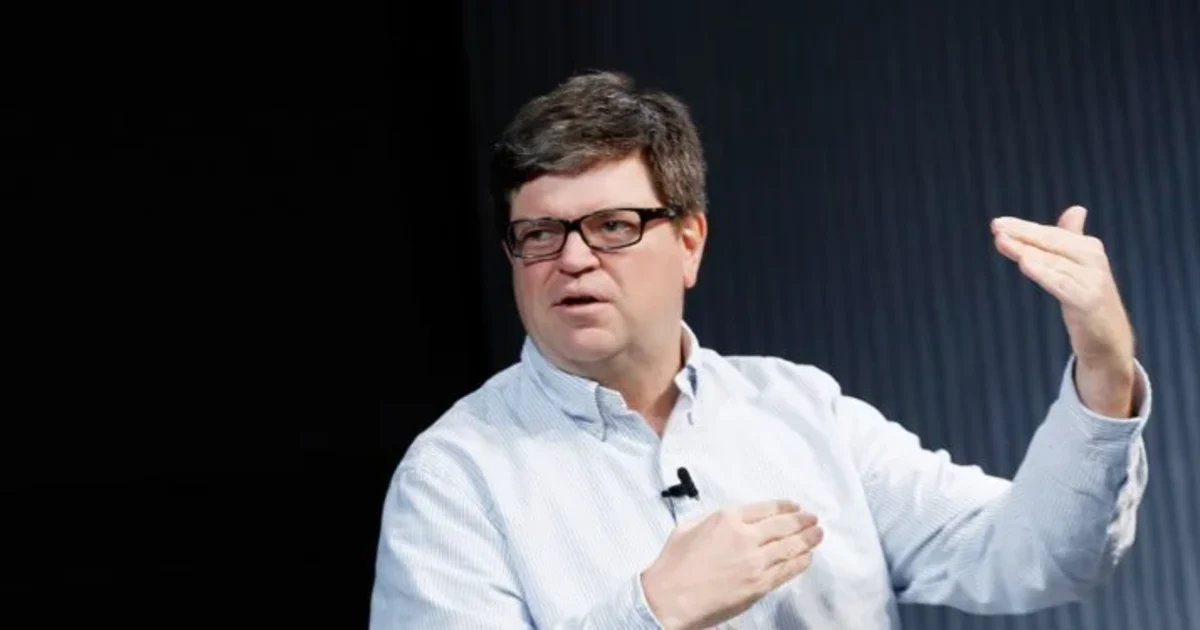
One of the “godfathers” of deep learning, a Turing Award laureate, and the loudest skeptic of large language models is returning to the venture-capital arena. This time he arrives with an institutional fund, credible partners, and a more careful choreography. Yet the story matters less for its dollar figure than for what it reveals about how unstable and overheated the industry around names of LeCun’s caliber has become.
What Happened
On August 5, 2026, Bloomberg, The Next Web, and Sifted reported that Yann LeCun had joined a new investment firm called 224 Ventures. The fund is focused on early-stage artificial intelligence and claims more than $100 million in assets under management, with the ambition of reaching at least $150 million once its main early-stage vehicle closes (its target size is roughly $81 million, of which, according to The Next Web, about $30 million has already been raised; a further $60 million-plus flows through separate special-purpose vehicles for later-stage deals).


There are three partners, and the lineup is telling:
- Yann LeCun — former chief AI scientist at Meta;
- Oriol Vinyals — a technical co-lead on the Gemini project at Google DeepMind who, according to reports, left DeepMind the very day the fund launched;
- Shaun Johnson — co-founder of AIX Ventures, who effectively runs the firm.
According to The Next Web, all three invest exclusively through 224 Ventures, vote on deals together, and split profits equally. The strategy is not to lead rounds but to enter with checks of $1–5 million into companies valued mostly below $100 million: AI applications, robotics, infrastructure, and “core intelligence.” Among the notable details is a base of roughly 244 limited partners (LPs), most of whom, as Sifted describes them, are practitioners of the field themselves — researchers, startup founders, and executives from major companies — rather than traditional venture investors. The Next Web names the University of Illinois as an anchor investor.
Why the Headline Mentions “Eight Hours”
The most dramatic part of the story concerns the previous attempt. In July 2026 (the Sifted and The Next Web reports are dated July 13), LeCun was announced as one of two “non-managing” general partners of a fund called Extelligence Invest. The fund positioned itself as an investor in technical founders across longevity, healthtech, new mobility, and compute, with ambitions to operate across Asia, Europe, and North America.

From there, according to the reconstruction by The Next Web and Sifted, events unfolded like this:
- On Friday morning, Extelligence publicly announced its partnership with LeCun (a Sifted journalist had verified this in advance with his spokesperson);
- Roughly six hours later, the fund told Sifted that LeCun had “existing exclusive relationships with other funds that were not fully understood at the time”;
- Shortly afterward, LeCun’s spokesperson said he was withdrawing, describing it as “one of many projects on his plate”;
- Ten minutes after that, Extelligence announced it would not launch the fund at all;
- By Saturday, the website was back online but stripped of all names and identifying details.
Separately, what raised alarm was that the fund’s website listed 29 supposedly backed companies. According to Sifted’s sources, these were in fact the partners’ personal angel investments, placed there “to show a track record.” Claims that the firm was registered with the SEC could not be verified by outside observers.


An important honest caveat: the precise nature of the “exclusive relationships” that caused LeCun to step back was never publicly disclosed. He himself characterized the situation more as a miscommunication than as anything larger. So “eight hours” is a documented, multi-outlet-confirmed fact about the rapid collapse of the announcement — but its root causes remain officially unexplained.
Who Yann LeCun Is and Why This Matters
To understand the weight of this news, some context is needed. Yann LeCun is one of three researchers (alongside Geoffrey Hinton and Yoshua Bengio) who received the 2018 Turing Award for their work on deep learning. He pioneered the convolutional neural networks that underpin modern computer vision. For more than a decade — effectively since 2013 — he led fundamental AI research at Meta (the FAIR lab), holding the title of the company’s chief scientist.
In November 2025, LeCun announced his departure from Meta after roughly 12 years. According to CNBC and other outlets, the underlying causes included strategic disagreements: Meta was moving ever more aggressively toward the commercialization of large language models, whereas LeCun consistently and publicly argues that the LLM architecture itself is a dead-end branch on the path to human-like intelligence. His frequently quoted thesis: models that merely predict the next token cannot truly understand causality or physical reality.
The alternative he champions is world models: systems that learn abstract representations of how an environment works, rather than statistical regularities of text. This, by his argument, is the path to understanding causality, space, and the consequences of actions — critical for robotics, industry, and medicine, where “hallucinations” are unacceptable.
This philosophy is embodied not only in rhetoric. In late 2025, LeCun, together with Alexandre LeBrun, founded the Paris-based startup AMI Labs (Advanced Machine Intelligence), devoted precisely to world models. According to several sources, the company raised around $1.03 billion at a valuation of $3.5 billion, with investors reportedly including Bezos Expeditions, NVIDIA, Samsung, Greycroft, Cathay Innovation, HV Capital, and Hiro Capital. Here, too, a caveat is warranted: different outlets cite somewhat different round details and dates (ranging from “over $1 billion seed in March 2026” to formulations about later valuations), so the specific figures should be treated as press reports rather than officially certified filings.
What It Means: Analysis
First, 224 Ventures is more of an “insider club” than a classic venture fund. When the lion’s share of its 200-plus LPs are themselves AI researchers and founders, the fund becomes a network of access: to deals, to talent, to early knowledge of what is being built behind lab doors. The presence of Vinyals, a person from the core of Gemini, alongside LeCun creates a duumvirate of unprecedented industry weight — two figures who have just walked out of two of the most powerful research centers on the planet, Meta and Google DeepMind.
Second, the contrast with Extelligence is a lesson in reputational leverage. A name of LeCun’s stature can lend legitimacy to almost any project within hours — and strip it away just as fast. The episode with the fabricated “track record” on the Extelligence site shows how valuable the scientist’s name alone has become, and how eagerly some entities are willing to exploit it. The speed with which LeCun withdrew can be read two ways: either as evidence of caution, or as a sign that the first announcement was made without sufficient diligence. With its institutional partners, joint voting, and anchor university investor, 224 Ventures looks like a deliberate attempt not to step on the same rake twice.
Third, there is an obvious tension between the role of investor and that of founder-visionary. LeCun simultaneously chairs AMI Labs (as executive chairman), advises Hiro Capital, and now invests through 224 Ventures. Managing conflicts of interest between his own world-models startup and a fund’s portfolio in “core intelligence” and robotics will be a constant test — and it was precisely those blurry “exclusive relationships” that already cost him one announcement.
Finally, this story is a miniature of the state of the whole industry in 2026. Capital is so abundant, and competition for association with big names so fierce, that funds are born and die within a single business day, billion-dollar valuations are handed to startups for an idea (however backed by a reputation of Nobel-class magnitude), and the line between researcher, entrepreneur, and investor has all but vanished.
Conclusion
The headline’s facts check out: Yann LeCun did indeed join a new fund, 224 Ventures, with a stated $100 million-plus, and this did indeed happen weeks after his previous venture announcement, Extelligence Invest, fell apart in a literal eight hours. The only thing that remains unconfirmed is the official reason for that collapse — it was never made public.
Behind this plot lies more than a venture news item. It is the story of a man who publicly bets that the entire industry is wrong about the path to genuine intelligence — and who now backs that conviction with both his own billion-dollar startup and a fund built as a network of like minds. Whether the bet on world models proves prophetic will become clear in the next cycle. For now, Extelligence’s eight hours and 224 Ventures’ hundred million are two sides of the same coin called the “reputation economy” of modern AI.
Sources
- Yann LeCun Joins New AI Investing Firm 224 Ventures — Bloomberg
- Yann LeCun’s second attempt at a VC fund lands with $100M and Gemini’s co-lead as a partner — The Next Web
- Yann LeCun joins new $100M AI fund, weeks after his last one lasted 8 hours — TechFundingNews
- Yann LeCun joins new VC firm backed by 244 LPs — Sifted
- Yann LeCun’s new VC fund lasted eight hours. Then it vanished — The Next Web
- Exclusive: Yann LeCun’s newly-launched fund shuts as exclusivity relationships emerge — Sifted
- Meta chief AI scientist Yann LeCun is leaving the company — CNBC
- Why Did Yann LeCun Leave Meta to Raise $1.03B? — BuildFastWithAI
- Meta’s Yann LeCun targets $3.5 billion valuation for new AI startup, FT reports — Yahoo Finance/Reuters