



An Agent in the Empty Chair: Amazon Veterans Bet That Synthetic Customers Can Predict a Launch
For decades, product teams have kept a metaphorical empty chair in the room to represent the customer who isn’t there. Primitive Labs, a San Francisco startup founded by a trio of Amazon and AWS veterans, wants to fill that chair with an AI agent — one that browses, hesitates, gets confused, and abandons a checkout the way a real human would. The company emerged from stealth in 2026 with a deceptively simple pitch: before you ship a feature, let a population of simulated customers use it first.
The idea sits at the leading edge of one of the year’s most-hyped software categories — variously called “synthetic users,” “virtual consumers,” or agent-based market simulation. Primitive Labs’ arrival, backed by Andreessen Horowitz’s Speedrun program, is a useful lens on both the promise and the unproven claims of a movement that argues software can now model the very humans it’s built for.


Who Is Behind Primitive Labs
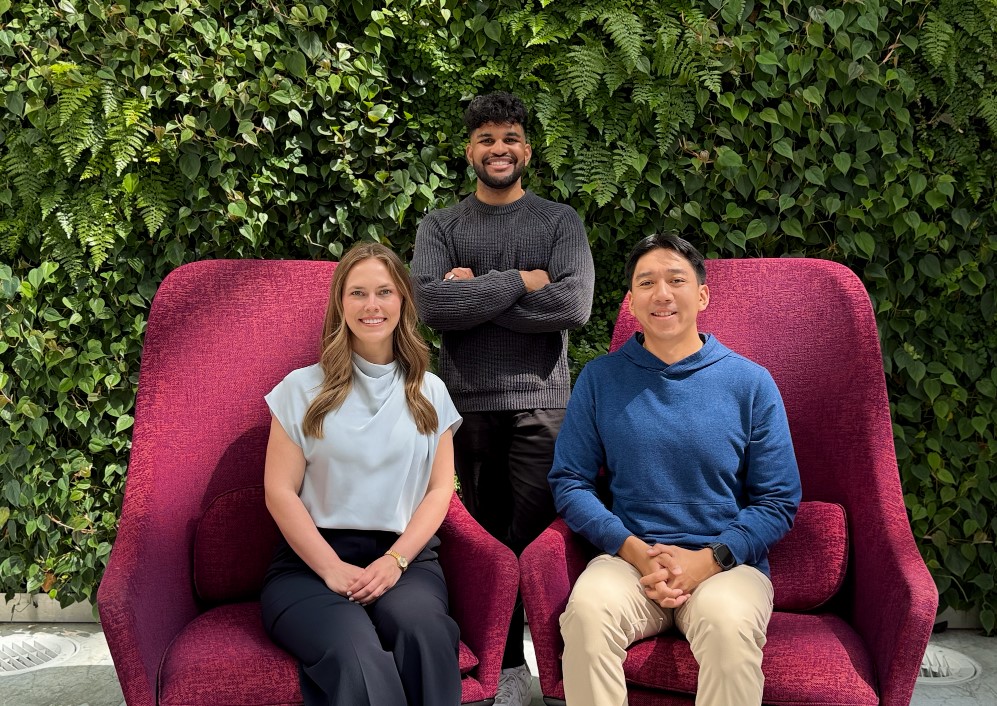
The founding team is drawn directly from Amazon’s frontier-AI efforts, which lends the venture credibility in a crowded field. CEO Rohit Talluri came from Amazon’s AGI Autonomy Lab, where he worked on computer-use agents and Nova Act — Amazon’s push into agents that operate software interfaces the way a person would. CTO Jean Farmer worked across AWS and Amazon AGI on the tool-use capabilities of Amazon’s Nova foundation models. COO Gabriel Fong brings the commercial side, with a background in AWS product marketing and enterprise sales, plus a prior sales and marketing leadership role at DoiT International.
That pedigree matters because the hard part of this problem is not generating a plausible-sounding customer opinion — any chatbot can do that. The hard part is building agents that can actually operate real interfaces across devices and platforms, observe what’s on screen, reason about it, and act. That is precisely the “computer-use agent” lineage the founders carried out of Amazon.
What the Product Actually Does
Primitive Labs describes its system as AI agents that simulate customer behavior across devices and platforms, observing, reasoning, and acting as customers would so that product teams can assess how users will react to a feature or design before it launches. In the company’s own framing, the mission is to “make human behavior a first-class primitive of software development” — hence the name.


Rather than the survey-style synthetic respondents that dominate the first wave of this category (ask a simulated persona a question, get an answer), Primitive is positioning around behavioral simulation: agents that actually move through a product flow. The company says its research draws on “formal state modeling, computational cognitive science, and training methods such as continual learning,” and that it is building “simulation architectures, memory systems, and agent interfaces.” The memory piece is notable — a customer who remembers a bad prior experience behaves differently from one encountering a brand cold, and modeling that continuity is where most naive simulations fall apart.
One founder quote captures the philosophical spin the company puts on an otherwise mechanical product: the goal, they say, is “bringing humans back to the center of a world that’s created by AI.” As AI accelerates how fast software gets built, the argument goes, the bottleneck shifts from writing code to knowing what to build and how people will respond to it.


The Money and the Backers
Primitive Labs raised a pre-seed round led by a16z Speedrun, Andreessen Horowitz’s accelerator for technical founders. The company has not publicly disclosed the round’s size. Co-investors include Olive Tree Capital, Cloverfield Fund, and Unexpected Ventures. The angel roster is unusually deep for a pre-seed and signals where the smart money thinks this is going: David Luan (a prominent figure in the agent world), Harsh Patel, Artur Kiulian, and tech commentator-turned-investor Josh Constine, alongside operator-angels from OpenAI, Google DeepMind, Databricks, Nvidia, and Meta.
A note on verification: a handful of third-party databases float specific figures — one lists a “$785K seed” — but these are unconfirmed and inconsistent with the company’s own “pre-seed” language, so they should be treated skeptically. Readers should also be careful not to confuse this company with an unrelated startup called “Primitive” that builds AI-agent infrastructure for financial institutions; the names collide in search results but the businesses are distinct.
As of its debut, Primitive Labs describes itself as pre-revenue, working with a small set of Fortune 500 and Fortune 50 companies in a testing phase, with general availability planned for later in 2026. No customer names or pricing have been disclosed. In other words, the proof is still to come.
The Bigger Bet: Synthetic Customers as an Industry
Primitive Labs is not a lone experiment; it is riding a wave. The clearest signal came from its own lead investor. In an influential report, a16z argued that AI is poised to disrupt the roughly $140 billion market-research industry, ushering in what it called a “virtual consumer” era. The thesis: generative AI agents can simulate consumer populations that “can be queried, observed, and experimented with, mimicking real human behavior,” turning research from a slow, one-time input into a continuous advantage. Analysis that once took weeks, the firm claims, can be done in hours.
Tellingly, a16z reports that chief marketing officers said they were satisfied with outputs that were merely “at least 70% accurate,” valuing speed and real-time iteration over theoretical perfection. That number is the whole ballgame — and its greatest vulnerability.
Primitive Labs joins a growing cohort. Startups such as Synthetic Users pioneered the survey-style approach of interviewing AI personas, while a lengthening list of tools now offers variations on simulated testing. Primitive’s differentiation is depth of behavior over breadth of opinion: agents that do rather than merely say.
The Skeptic’s Case
For all the momentum, the category rests on an unresolved question: do simulated customers actually predict real ones? A language model trained on the internet reflects how people talk about their preferences, which is not the same as how they behave under friction, fatigue, price sensitivity, or confusion. Simulations are prone to homogenization — flattening the messy tails of human behavior into a plausible average — and to sycophancy, telling product teams the encouraging thing. That “70% accurate” threshold sounds reassuring until a launch decision hinges on the missing 30%.
The honest framing, which Primitive’s founders seem to grasp, is that synthetic customers are a filter, not an oracle: a fast, cheap way to catch obvious failures and prioritize what to test with real humans, not a replacement for them. The companies that win this category will likely be the ones that validate their agents against real-world outcomes and publish the error bars, rather than selling certainty.
Conclusion
Primitive Labs is a well-credentialed, well-funded early entrant in a category that its own lead investor has declared a multi-billion-dollar opportunity. The verified facts are real: an Amazon-AGI founding team, an a16z Speedrun-led pre-seed with a marquee angel list, and a product aimed at simulating customer behavior before launch, currently in testing with large enterprises ahead of general availability later in 2026. What remains unverified — the round size, the accuracy of the simulations, and whether Fortune 500 pilots convert to paying customers — is exactly what will determine whether the empty chair stays filled. For now, the most defensible reading is that Primitive Labs is a serious bet on a genuinely emerging idea, not yet a proven business.
Sources
- An agent in the empty chair: Amazon vets launch Primitive Labs, using AI to model customer behavior — GeekWire
- Introducing Primitive Labs
- a16z Report: AI Disrupts $140 Billion Market Research Industry, Virtual Consumer Era Arrives — AIbase
- Primitive Labs $785K Seed Funding (2026) — FundUp
- The rise of synthetic users — Bootcamp / Medium
- Synthetic Consumers & AI Market Research — PyMC Labs
- The 12 Best Synthetic Users Tools for Smarter Testing — Uxia Blog
- Primitive Launches System to Help Financial Institutions Deploy AI Agents — PYMNTS